FOOD AND NUTRIENTS: What's the difference?
Share
Very often we confuse the use of these two terms, considering them as synonyms but in reality they are words with a completely different meaning.
Let's proceed in order: the term NUTRITION means the process of ingesting food, substances necessary for our body to carry out its biological functions. The term NUTRITION instead means the ability of our body to use some components of food, i.e. nutrients, which represent essential elements for our body to support its energy metabolism and more generally all vital functions.
So at this point we can say that FOODS are substances capable of providing NUTRIENTS that can be used by our body and can be distinguished based on their nutritional characteristics into 5 food groups:
- Cereals and tubers: Pasta, rice, bread, potatoes, etc. (generally considered sources of carbohydrates)
- Vegetables and fruits (Considered sources of fiber and vitamins and minerals)
- Milk and derivatives: Milk, yogurt, cheeses (foods with proteins and fats)
- Meat, fish, eggs and legumes (foods that contain proteins)
- Seasoning fats: Oil, butter... (foods that are sources of fat)
When we eat foods they are digested and transformed from complex substances into increasingly simpler and more easily usable substances by our body which are called nutritional principles or nutrients.
Nutrients can perform various functions such as energy , i.e. they provide the energy necessary for the organism to carry out all its functions, or plastic as they represent the "construction" material useful for the development and maintenance of the structures of our body, but there are many other important functions such as reserve , protective or transport .
Some nutrients are defined as essential as we are not able to produce them independently and for this reason it is very important that they are introduced with food. Among these nutrients, WATER plays a fundamental role and is considered a truly ESSENTIAL nutrient.
Nutrients can be classified in relation to their intake into MACRONUTRIENTS and MICRONUTRIENTS. In particular, MACROs are nutrients that our body requires in higher quantities and among these there are:
- Carbohydrates or carbohydrates
- Proteins
- Lipids
MICROs, on the other hand, are nutrients that are always necessary for our body even if in smaller quantities and these are divided into:
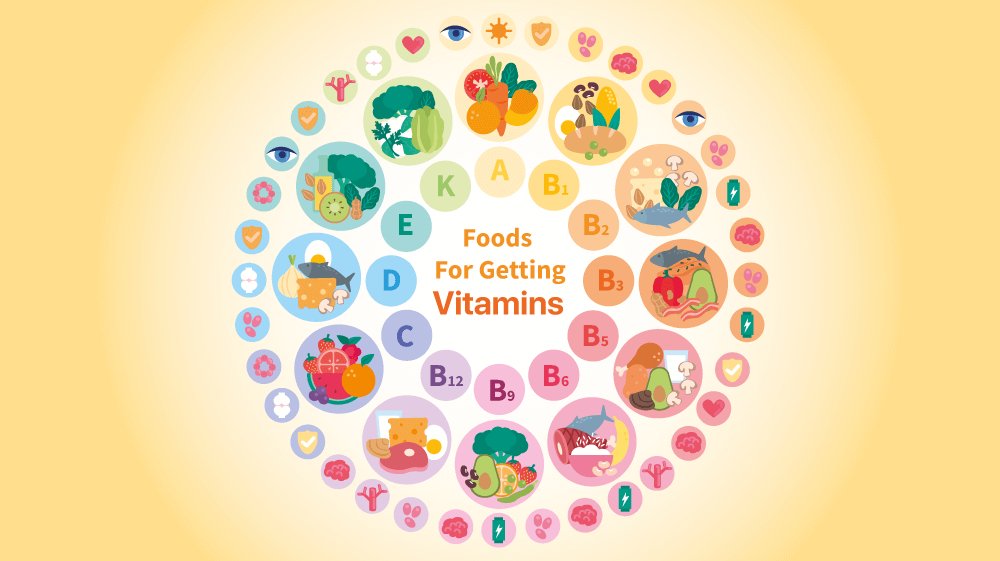
- Vitamins
- Mineral salts
In addition to nutrients, in foods we can also find other elements often present in considerable quantities such as FIBERS or ETHANOL but also elements present in reduced quantities such as ANTINUTRIENTS or NUTRACEUTICAL substances which can however have notable effects on our body.
A very important factor to consider is the bioavailability of nutrients present in foods. Bioavailability means the fraction of a nutrient that the body is able to absorb and use to carry out physiological functions and this can be influenced by various factors which we group into:
- Intrinsic factors and therefore linked to the person such as age, intestinal microbiota, food intolerance...
- Extrinsic factors instead linked to the food that provides the nutrients, among these we find for example antinutrients, technological treatments, cooking, pH or interactions between nutrients...
For this reason, sometimes it is not enough to know if a food is rich in a particular nutrient but the bioavailability in the food in question must also be considered.
So remember to combine a source of fat such as EVO oil when you consume IoBoscoVivo Shiitake mushrooms ( https://shop.ioboscovivo.it/collections/all ) rich in vitamin D so as to promote the absorption of this fat-soluble vitamin!!
Bibliography
- INRAN, Guidelines for a Healthy Italian Diet. Available at http://www.fao.org/3/a-as686o.pdf
- Reference Intake Levels of Nutrients and Energy for the Italian Population. 4th revision – 2nd reprint