
Let's get to know proteins better!
Share
Today we know about proteins, that is, those biological molecules that are most abundant in the human body, after water! These molecules perform many important functions in our organism, among which we highlight:
- plastic/structural or support, for example collagen which constitutes the connective tissue;
- protective: they are constituents of the antibodies that the body produces to defend itself from bacteria and viruses;
- transport such as hemoglobin which transports oxygen in the blood, or lipoproteins responsible for the transport of fats;
- storage for example ferritin, a protein that captures the iron that the spleen recovers from the demolition of old red blood cells;
- contractile proteins such as actin and myosin, which allow muscles to shorten and lengthen.
- Regulatory as they are constituents of hormones
To all these we must add and consider as perhaps the most important, the regulatory and energetic function performed by enzymes, which act by accelerating biological reactions and transforming slow reactions into faster processes, with lower energy requirements!
Structure of proteins
Generally these are very large molecules and composed from a chemical point of view mainly of carbon, hydrogen, oxygen and nitrogen.
Proteins are made up of a chain of amino acids joined together by specific bonds called peptide bonds . The amino acid chain constitutes what is defined as the primary structure of proteins and this, following the establishment of different types of forces between the different amino acids, can fold on itself, take on a three-dimensional structure and also bind to other chains to form a more elaborate overall structure.
Taking a small step back we can say that amino acids are the basic units of proteins and depending on their number and sequence they give rise to specific proteins with precise functions.
There are thousands of different proteins in our body but to synthesize them "only" 20 amino acids are needed, of which 9 are defined as essential as we are not able to produce them independently and therefore need to take them from our diet.
Protein turnover
In our body, proteins undergo a continuous protein turnover, that is, a process of protein demolition and synthesis that allows us to regulate the synthesis itself in relation to our needs. The amino acids obtained from the breakdown of proteins consumed in the diet constitute the amino acid pool, a deposit from which the amino acids necessary for the synthesis of new proteins are taken. If even one essential amino acid is missing from this deposit, the body will not be able to complete the synthesis of new proteins and it is for this reason that it is essential to consume all the essential amino acids in adequate quantities!
Protein quality
As we have already said, the proteins we consume are split into amino acids and these, in turn, are reused for the synthesis of new proteins. During this process the first essential amino acid to be missing is the one responsible for stopping synthesis and is defined as the limiting amino acid . Based on this we can say that the actual effectiveness of a protein depends on its amino acid composition and that the biological value of each protein is defined by the presence of all essential amino acids (EAA) in the optimal proportions to promote protein synthesis.
Considering a reference protein, i.e. a protein that is supposed to be completely used for the purposes of protein synthesis, as happens for example with egg proteins which are assigned a biological value equal to 100 (maximum value), we can distinguish:
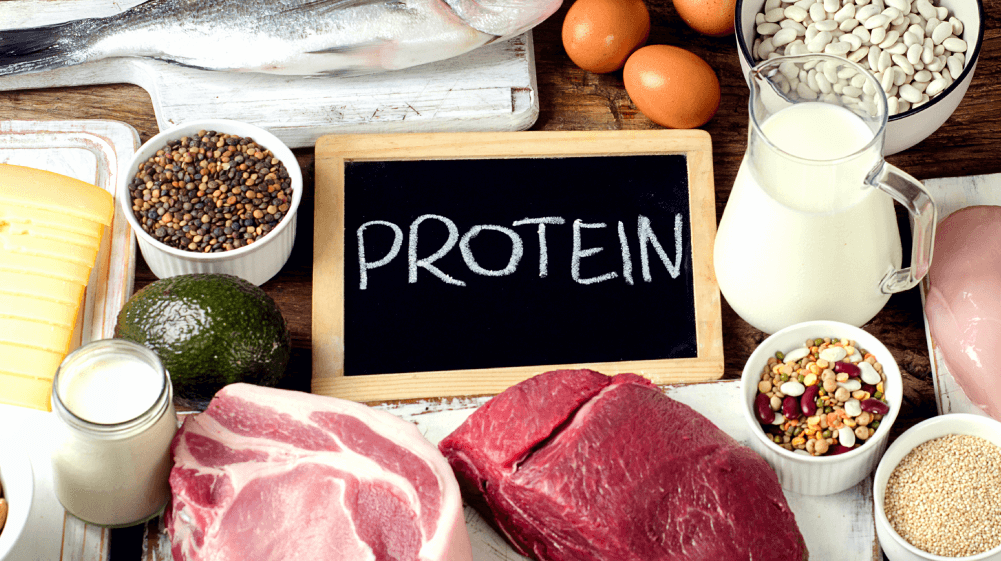
- Proteins with high biological value: contain all EAAs and in nutritionally adequate quantities (meat, fish, milk, eggs, cheeses)
- Medium biological value proteins: all the EAAs are present but some are in reduced quantities (legumes)
- Low biological value proteins: they lack one or more EAAs (cereals).
It can be seen that products of animal origin provide proteins with a higher biological value than vegetable ones, this is because they have a higher content of essential amino acids. However, it is very important to know that plant foods can still provide excellent quality proteins when combined with other foods containing different types of plant proteins. An example is the combination of legumes which have an average biological value as they lack the amino acids methionine and cystine, with cereals, which are rich in these amino acids but lacking in others which are instead present in legumes.
All IoBoscoVivo products are considered a source of protein thanks to the presence of our shiitake mushroom but also thanks to the careful selection of organic and quality ingredients such as legumes for the production of cream soups and the wholemeal spelled flour present in our breadsticks which allow us to achieve a higher protein intake than many of the equivalent products on the market!
Bibliography
- FAO,WHO, & UNU. 2007. Expert Consultation on Protein and Amino Acid Requirements in Human Nutrition. Technical Report Series 935. Available at https://apps.who.int/iris/handle/10665/43411