Shiitake mushrooms and CHITOSAN
Share
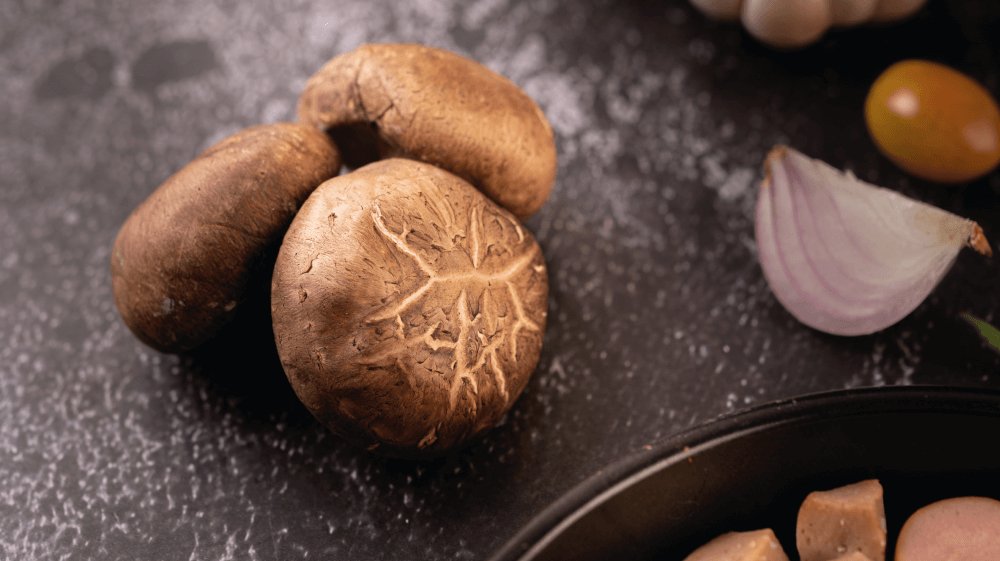
The Shiitake mushroom ( Lentinula edodes ), as we well know, is an edible mushroom and classified as a medicinal mushroom thanks to its countless properties, which we have already talked about in previous articles. Shiitake is one of the most cultivated mushrooms in the world and is an excellent source of chitin and its derivative, chitosan (Discover IoBoscoVivo Shiitake Mushrooms at our SHOP https://shop.ioboscovivo.it/collections/all ).
Chitin is the second most common organic compound in nature after cellulose. It is a polysaccharide, that is, a compound characterized by a large number of units of simple sugars linked together and which are repeated to form larger and more complex molecules. Chitin represents the main component of the cell wall of fungi and bacteria, of the exoskeleton of arthropods, such as crustaceans (crabs, lobsters, prawns and shrimps) and insects (ants, cockroaches, butterflies), of the radula of molluscs and green algae.
Chitosan derives from the deacetylation of chitin (a process that can occur through a chemical or enzymatic reaction), widely used in various fields thanks to its natural origins and exceptional properties such as biodegradability, non-toxicity and ability to chelate (absorb) ions metals which make it a versatile compound.
An important peculiarity is that the chitosan present in mushrooms is more bioavailable than that of crustacean shells which, in addition to containing high levels of inorganic materials which therefore require demineralisation, are also unsuitable for people who choose to follow a lifestyle vegan or vegetarian unlike mushrooms.
Chitosan boasts notable beneficial properties for our body: first of all, a dose-dependent inhibitory effect on the development of some species of pathogenic bacteria has been demonstrated, thus proving to be an effective antimicrobial. Several studies have also highlighted the use of this substance as a valid aid in controlling blood pressure, preventing constipation and maintaining adequate blood levels of uric acid, to which are also added antioxidant and hypocholesterolemic properties such that the EFSA ( the European Food Safety Authority) has authorized the health claim according to which "chitosan contributes to maintaining normal blood cholesterol levels".
Lastly, the anti-tumor and anti-metastatic properties which appear to be attributable to chitosan oligosaccharides obtained from mushrooms are currently being studied, in particular the latter seem to be involved in the inhibition of cell proliferation which is out of control in oncological diseases.
Leaving the nutritional field, but considering it from an industrial point of view, chitosan is useful in processes that require a purification phase, such as for example in water purification plants as it is able to absorb considerable quantities of impurities such as oils, fats, and other types of toxins that can be dangerous to humans, animals and the environment. Thanks to its ability to absorb heavy metals such as copper, iron and cadmium, it allows them to be removed from the water, thus further contributing to its purification.
Bibliography
- El Knidri, Hakima et al. (2018) Extraction, chemical modification and characterization of chitin and chitosan. International journal of biological macromolecules 120,Pt A: 1181-1189. Available at https://pubmed.ncbi.nlm.nih.gov/30172808/
- Menk JJ, do Nascimento AIS, Leite FG, et al. (2019). Biosorption of pharmaceutical products by mushroom stem waste. Chemosphere .237:124515. Available at https://doi.org/10.1016/j.chemosphere.2019.124515
- Muxika, A et al. “Chitosan as a bioactive polymer: Processing, properties and applications.” International journal of biological macromolecules vol. 105,Pt 2 (2017): 1358-1368. Available at https://doi.org/10.1016/j.ijbiomac.2017.07.087