
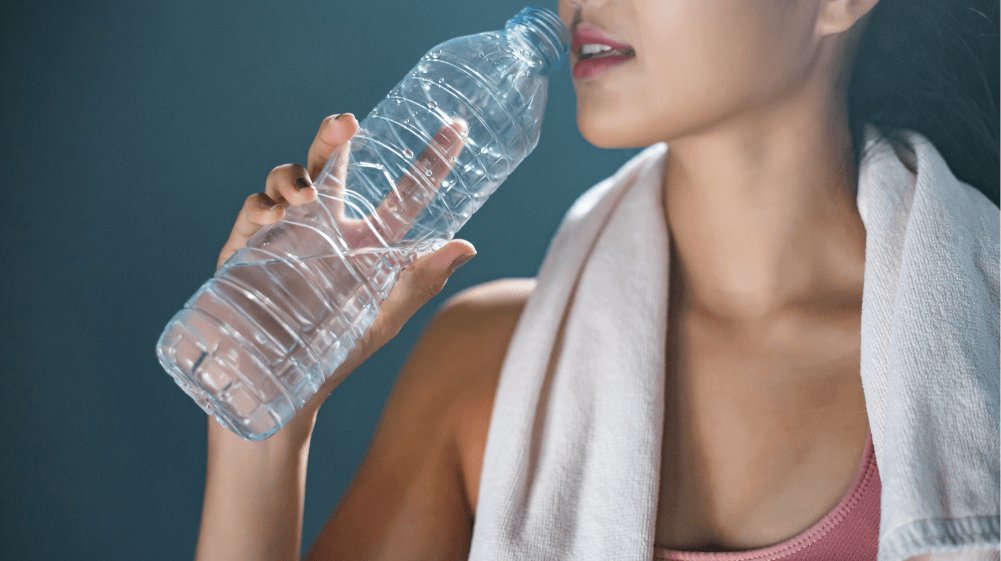
HYDRATION in sports
Share
Hydration is extremely important for everyone and becomes even more so for sportsmen and women who, as we will see, have particular needs.
One of the main functions of water is to contribute to thermoregulation, i.e. the maintenance of body temperature at physiological levels. The hypothalamus is the structure responsible for controlling the temperature of our body, it works as a sort of always active thermostat to maintain the deep central temperature constantly around 37°C. Assuming that deep central temperature refers to the temperature of our tissues and organs, we can say that this is the result of processes regulated at the hypothalamic level which tend to increase and decrease it.
Deep core temperature and physical activity:
With physical activity the deep core temperature increases, but as a consequence of the exercise the blood flow to the skin also increases combined with a stimulation of the sweat glands with the production of sweat. It is not the sweat itself that lowers our temperature but rather its evaporation, resulting in a cooling of the skin and consequently also of the blood that perfuses it, thus contributing to the reduction of first the skin and then the body temperature. This sweating/evaporation process is therefore very important and is essential to prevent, for example, heat stroke following intense physical exercise and in conditions of high ambient temperature.
A condition of dehydration can lead to the inability of our body to cool itself effectively causing greater stress on the lungs and the heart, which will have to beat faster to pump the blood (more viscous due to the lack of liquids) throughout the body.
It must be considered that depending on the intensity and duration of the training, the loss of fluids could be significant and could negatively influence sporting performance!
So, how do you achieve the right balance?
The best strategy is certainly to stay well hydrated throughout the day, drinking little water but often. A valid tip for everyone, athletes or not, is to always carry a bottle of water with you so as to remember to drink constantly!
When and how much?
The National Athletic Training Association (2000) recommends:
- consumption of 500-600ml of water 2-3 hours before exercise;
- 200-300ml of water 10-20 minutes before exercise;
- 150-350 ml of water at intervals of 15-20 minutes during exercise.
Thus allowing you to maintain an optimal state of hydration before and during sports performance!
After training, it must be considered that muscle growth and cellular recovery can only occur if the cells are completely hydrated, which is also why it is important to replenish lost fluids.
And what to drink?
If the training lasts more than 60 minutes it may also be necessary to replenish the mineral salts and a good solution could be to choose to drink mineralized water, therefore with a good mineral content (fixed residue between 500 and 1500mg/L) that allows for its reinstatement.
Furthermore, we must consider that before training it would be better to avoid drinks rich in carbohydrates: in fact, for example, taking even just 300ml of a drink containing 6% high GI carbohydrates (glucose, maltodextrin, sucrose) can inhibit the use of fats and cause so-called reactive hypoglycemia.
After physical effort, however, drinks with a low quantity of fructose or maltodextrin can promote the speed of water reabsorption. The speed of rehydration is maximum with drinks that are isotonic to plasma, containing 5% carbohydrates and approximately 50 mmol/L sodium; For example, after long sessions of intense physical activity in a hot and humid environment, it becomes useful to drink a drink that contains sodium so as to enhance the absorption of liquids and re-establish the normal balance of