Why Shiitake mushrooms?
Share
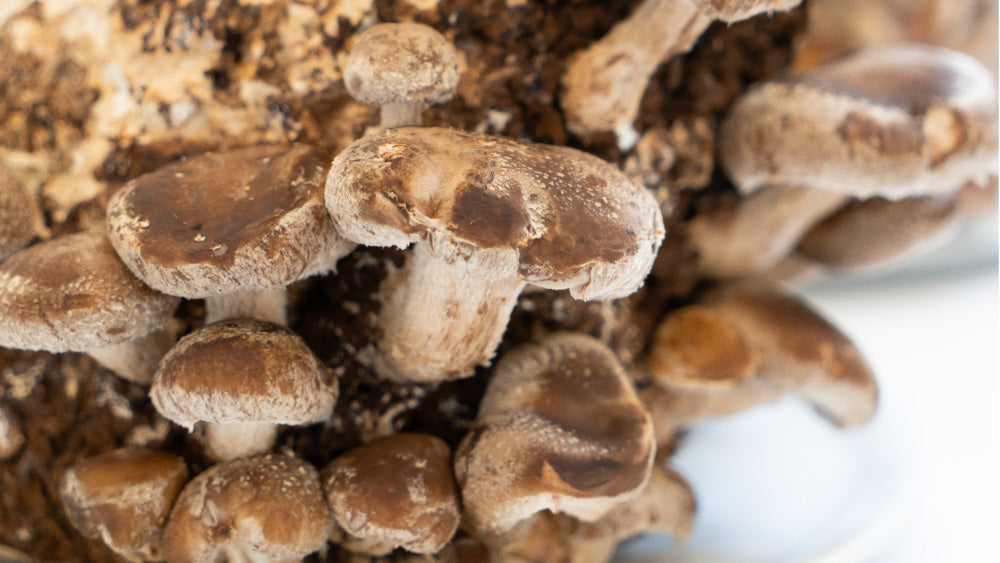
Shiitake ( Lentinus edodes ) is a medicinal mushroom often used in mycotherapy (the medicine that uses mushrooms as therapy to fight various pathologies), especially in the East.
It is the second most well-known and marketed mushroom in the world and fully represents and respects our philosophy BE GREEN because the substrate or wood where the mushroom grows is reused for pellet stoves or wood (circular economy) and BE HEALTHY because it is a true It is functional food, that is, a food that can contribute to maintaining well-being and, thanks to its numerous nutritional properties, can help in the prevention of various pathologies.
Shiitake mushrooms: benefits and nutritional properties:
The fruiting body of the mushroom includes 88% to 92% water and is a low-calorie food. It has a high nutritional value as it contains all the essential amino acids but also ERITADENINE, a unique amino acid that gives this mushroom hypocholesterolemic properties such that it can be defined as a natural supplement for lowering cholesterol!!
Shiitake mushrooms also possess various minerals including potassium, calcium, magnesium, manganese, iron, copper and zinc but also various vitamins such as those of group B necessary for the correct functioning of the nervous system, liver, skin, eyes and scalp; pro-vitamin D (ergosterol), which becomes vitamin D2 (calciferol) in the presence of ultraviolet light (vitamin D is essential for the correct absorption of Calcium and Phosphorus, it also stimulates the immune system making the body stronger) .
Among the various components responsible for the beneficial effects of Shiitake mushrooms we cannot fail to mention β-glucans, and in particular Lentinan which seems to act by promoting the activity of the immune system but also in maintaining low levels of cholesterol and glucose in the blood.
Shiitake is considered a medicinal mushroom but is not a drug, the beneficial effects of this mushroom have been demonstrated in many studies, the use of this mushroom like any food must be included in a healthy lifestyle that includes correct nutrition and physical exercise.
More generally, numerous studies have confirmed the preventive and auxiliary role of Shiitake against various pathologies: The main action remains that of supporting the immune system thanks to the presence of β-glucans which have the ability to promote and activate immune cells, and specifically, to promote the activity of macrophages, T lymphocytes, NK cells and other effector cells of our immune system.
Mushrooms are practically the only vegetal source of vitamin D: among these the IoBoscoVivo Shiitake, thanks to the careful qualification of the suppliers and the attention to the cultivation techniques adopted, has average values of 116µg per 100g of dried mushroom. For this reason we include on the label the Health Claim "SOURCE OF VITAMIN D WHICH CONTRIBUTES TO THE NORMAL FUNCTIONING OF THE IMMUNE SYSTEM". ( https://ioboscovivo.com/shop/ )
To summarize therefore we can say that Shiitake can help the body to have a general state of well-being, it has immunostimulant/immunomodulatory properties (its components act by rebalancing and strengthening the activity of the immune system), it allows the regulation of blood pressure and sugar levels, lowers cholesterol and can support the cardiovascular and digestive systems. An interesting aspect of this mushroom is its effectiveness as a prebiotic with positive effects on the intestinal microbiota.
Last but not least, a property of Shiitake mushrooms is their aroma, flavor and versatility in the kitchen, making it an excellent ingredient for all recipes, from sweet to savory and also perfect for risky combinations: it is no coincidence that it is requested by the best chefs for use it in their starred recipes!
A curiosity: The name derives from the Japanese word "Shii" or oak and from the word "take" which means mushroom . It is characterized by a white halo on the hat like a crown, in fact in the East it is defined as the "King of cultivated mushrooms".
Bibliography
- Cazzavillan, S. (2011), Medicinal mushrooms from tradition to science. New IPSA publisher.
- Kamiya, T., Saito, Y., Hashimoto, M. and Seki, H. (1972), Hypocholesterolemic alkaloids of lentinus edodes (berk.) sing. II. A novel synthesis of eritadenine. Journal of Heterocyclic Chemistry, 9: 359-362. https://doi.org/10.1002/jhet.5570090230
- Enman, J. (2007). Production and quantification of eritadenine, a cholesterol reducing compound in shiitake (Lentinus edodes). Available at http://ltu.diva-portal.org/smash/get/diva2:989937/FULLTEXT01.pdf