
PROTEINS: where, how and why
Share
Normally, those foods in which at least 30% of the calories come from proteins are considered protein and, as we have already introduced in a previous article, the food sources can be of both animal and plant origin, providing different protein quantities depending on the type. of food.
Protein content in foods
Unlike other macronutrients, there are no foods made up of 100% proteins, but we find them at most around 30g per 100g of product:
- In beef the protein quantity varies between 20g and 22g, in chicken between 18g and 24g and around 20g for rabbit, lamb and pork.
- In fish products the content is very variable: 13-22g in fish and 10-13g in molluscs.
- As regards fresh milk, the protein content is around 3g while in cheeses it ranges from 10-18g for fresh cheeses up to even 33g for very mature cheeses such as parmesan.
- Most products derived from cereals have a protein content between 7-28g while in flours the quantity varies between 7g and 14g.
- Lastly, dried legumes are the foods of plant origin that have the highest protein content between 20g and 24g with the exception of soy which has 37g of protein per 100g; however, these values are reduced when talking about fresh legumes.
- In vegetables and fruit in general, the protein intake per 100g is very low, reaching a maximum of 3 or 4g of protein but... the exception that confirms the rule is the dried shiitake mushroom IoBoscoVivo!! In fact, our shiitake mushrooms represent a source of protein, providing 13g per 100g of product!!
So taking into consideration what has been said so far, in order to really evaluate how much protein we are consuming we must consider the protein content of the food, not forgetting to also refer to the portion we are consuming!
Another fundamental point is how to consume proteins:
We have said that to optimize protein synthesis it is best to consume a modest quantity of protein at each meal so as to reach the daily requirement. However, it is important to keep in mind that to be adequate, every meal must be BALANCED, that is, it must provide all the macronutrients in the right quantities!
Scientific studies have shown how insulin (the hormone responsible for blood sugar control) is not only released following the intake of carbohydrates but also in response to the consumption of other macronutrients, although with a significantly different impact.
Proteins, although they do not cause an increase in blood sugar, contribute to the release of insulin due to some amino acids defined as insulinogenic (leucine, valine, arginine and lysine).
Normally, after eating a balanced meal, insulin (hypoglycemic hormone) is produced which lowers glucagon (hyperglycemic hormone) levels, promoting the uptake of glucose into the cells and thus reducing blood sugar levels. After a predominantly protein meal with the exclusion of carbohydrates, we will have a stimulation of insulin production by insulinogenic amino acids, thus resulting in a significant lowering of blood sugar levels which cannot be compensated due to the lack of carbohydrates in the meal. The lowering of blood sugar in turn involves the release of glucagon by the pancreatic cells in order to restore optimal levels of glucose in the blood but resulting in a condition in which we will have both high levels of insulin and glucagon. This happens because our body is "set" to respond immediately to every stimulus, trying to restore optimal conditions for health; However, when this type of predominantly protein diet continues over time, the levels of these hormones remain constantly high, determining in the long term the appearance of insulin resistance and subsequently type 2 diabetes!!
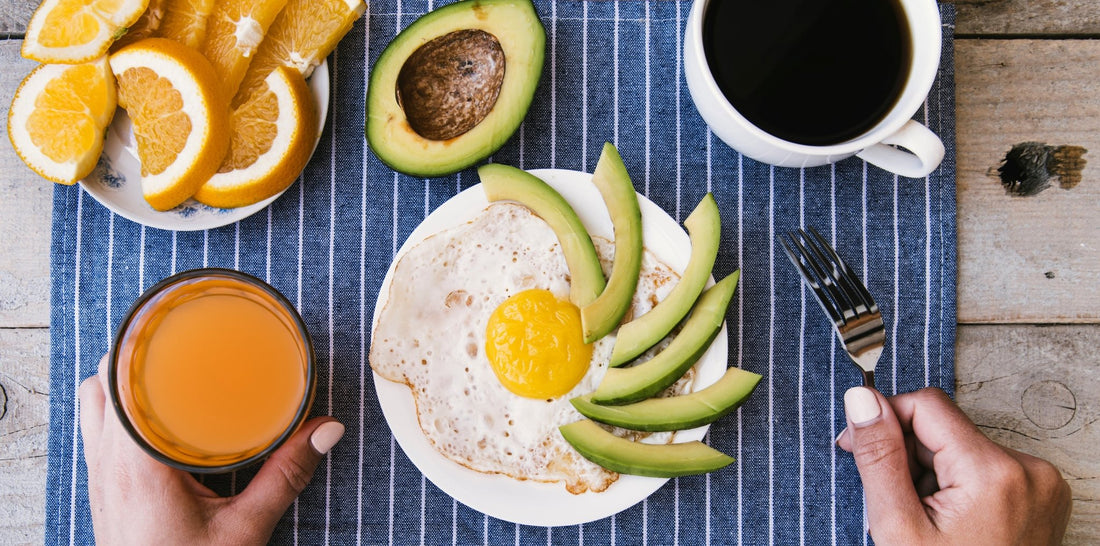
So composing a balanced meal is definitely a first step to avoid the onset of hormonal imbalances! Let's take for example the classic Italian breakfast consisting of croissant and cappuccino (and therefore lacking in protein): there is a hyperinsulinising and hypoglycaemic effect due to insulin, synergistically stimulated by refined flour, sugar and hydrogenated fats contained in the croissant, together to the milk and sugar of the cappuccino. Similar effects can be found in sweet breakfasts based on biscuits, white bread, butter, jam, sweetened milk. On the contrary, a breakfast which includes a protein portion such as a hard-boiled egg with wholemeal bread and fruit, which instead consists of the consumption of unrefined foods with the right balance between wholemeal carbohydrates and proteins, allows the body to receive all the necessary nutrients to face the day without causing insulin spikes that are harmful to the body.
Let us know if you liked it, contact us for any information by email: info@ioboscovivo.it or on our social networks Facebook (IoBoscoVivo) and Instagram (@ioboscovivo_healthy)! Also come to our shop to learn about all the IoBoscoVivo products!!
Bibliography
- Reference Intake Levels of Nutrients and Energy for the Italian Population. 4th revision – 2nd reprint
- Ministry of Health, Higher Institute of Health. Nutrition in motor and sports practice. Available at https://www.iss.it/documents/20126/0/Libretto_Alimentazione.pdf/46cc1fe6-0f9e-9722-acf7-36dc3d350ac0?t=1582280465780
- Susanne H. Holt, Janette C. Brand Miller, and Peter Petocz. An Insulin Index of Foods: The Insulin Demand Generated by 1000-kJ Portions of Common Foods. American Journal of Clinical Nutrition 1997, Vol. 66: pages 1264-1276. Available at https://doi.org/10.1093/ajcn/66.5.1264
- Guglielmo C. The great book of the eco-diet. A new vision of health.Edizioni Mediterranee, ISBN 8827217509, p. 77-79. 2005