Let's find out better...WATER!
Share
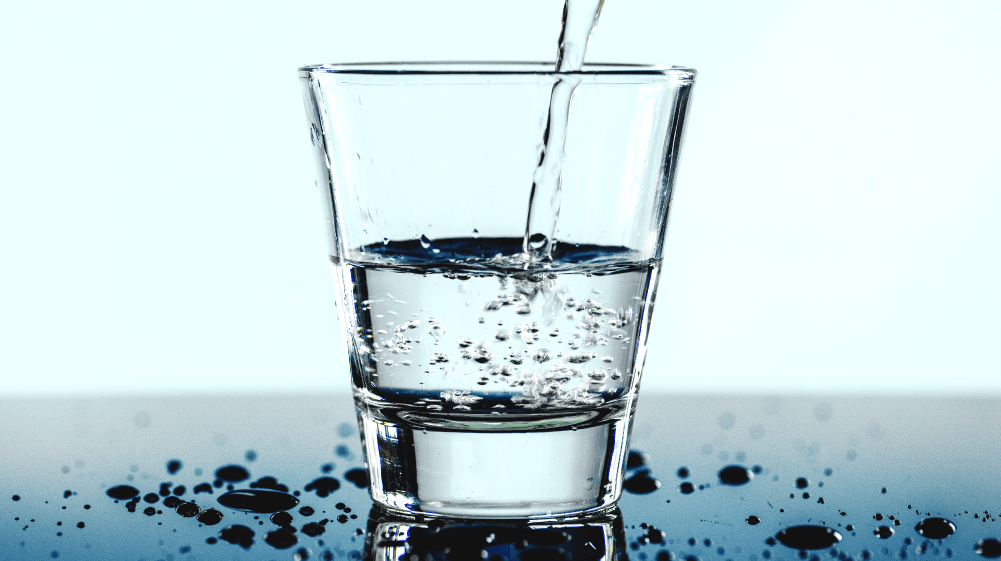
Water is an essential nutrient and as such it is necessary to consume it daily to maintain good health. In our body, water is essential for the carrying out of biochemical reactions, as well as for the regulation of body temperature and for the elimination of substances produced by catabolic reactions. Hydration is also important for the digestion, absorption, transport and utilization of nutrients and ultimately acts as a lubricant in the joints and keeps the skin and mucous membranes elastic.
Precisely for all these functions it is essential that an adequate state of hydration is maintained even if this can depend on many factors including nutrition, temperature and physical activity.
Can foods therefore affect water needs?
Of course yes! In fact, every food can contribute to the daily intake of water, even if each in very different quantities! The CREA body reminds us in its guidelines that in addition to drinks, milk, fruit and vegetables are made up of over 85% water and represent the foods with the highest water content even if, particularly for the milk, we must keep in mind that since it is a complete food it is also good to consider its energy intake. Followed by meat (what we assume is the muscle where the cells and therefore the water of the intracellular compartment are present), fish, eggs and fresh cheeses whose water intake varies from 50 to 80% of the weight of the food . Then there are products such as pasta and rice which once cooked still have a modest water content (around 60%) and then those in which the water intake is significantly reduced such as bread and pizza which is around 20-40%. % and dry biscuits, breadsticks and dried fruit which contain less than 10%. Lastly we find oil and sugar which are completely free of them.
Overall, foods can provide a water intake varying between 20 and 40% of the daily requirement which will obviously be greater if the diet is rich in fresh fruit and vegetables and less if it is rich in foods with high energy density in which normally the water content is lower. For example, the fruiting body of the fresh Shiitake mushroom includes 88% to 92% water while its quantity decreases considerably in the case of the dried mushroom! For this reason, when you use our dried shiitake mushrooms, remember to rehydrate them so as to optimize their organoleptic properties and increase the water intake!
There is also a minimal endogenous production of water and it is the one produced by our body to metabolize energy substrates! This quantity, however, is very small and is estimated at around 250-350ml/day in sedentary subjects.
As regards water losses, however, these correspond to the elimination of liquids by the organism and occur mainly through urine and with the process defined as perspiratio insensibilis , i.e. through sweating and subsequent evaporation, and to a minimal extent with feces.
Bibliography
- Guidelines for healthy eating. Available at http://www.salute.gov.it/imgs/C_17_pubblicazioni_2915_annex.pdf
- Inguaggiato, R., Leandro, G., Water as food. Available at https://webaigo.it/download/20180806164853.pdf
- Reference Intake Levels of Nutrients and Energy for the Italian Population. 4th revision – 2nd reprint