Vitamin D
Share
Vitamins constitute a very heterogeneous group of substances, they do not provide calories but are extremely important for the normal functioning and development of our organism!
Vitamin D is part of the group of fat-soluble vitamins and in our body it is accumulated in the liver and partly in the adipose tissue, constituting a real supply that the body releases in small doses when necessary.
Vitamin D sources:
We usually find vitamin D in two forms: ergocalciferol (or vitamin D2) of plant origin and cholecalciferol (or vitamin D3) of animal origin.
The main source of vitamin D for our body is certainly the skin where, following exposure to solar UVB rays, Cholecalciferol is produced.
In fact, in temperate latitudes and with normal exposure to sunlight, 80% of the vitamin D needed by our body is produced at the skin level and only 20% is taken in with food. In reality, however, there are several factors that can have a negative impact by reducing the skin production of vitamin D and among these there are skin pigmentation, the presence of covering clothing especially in the winter months when the time of exposure to the sun is also reduced , age and use of sunscreens.
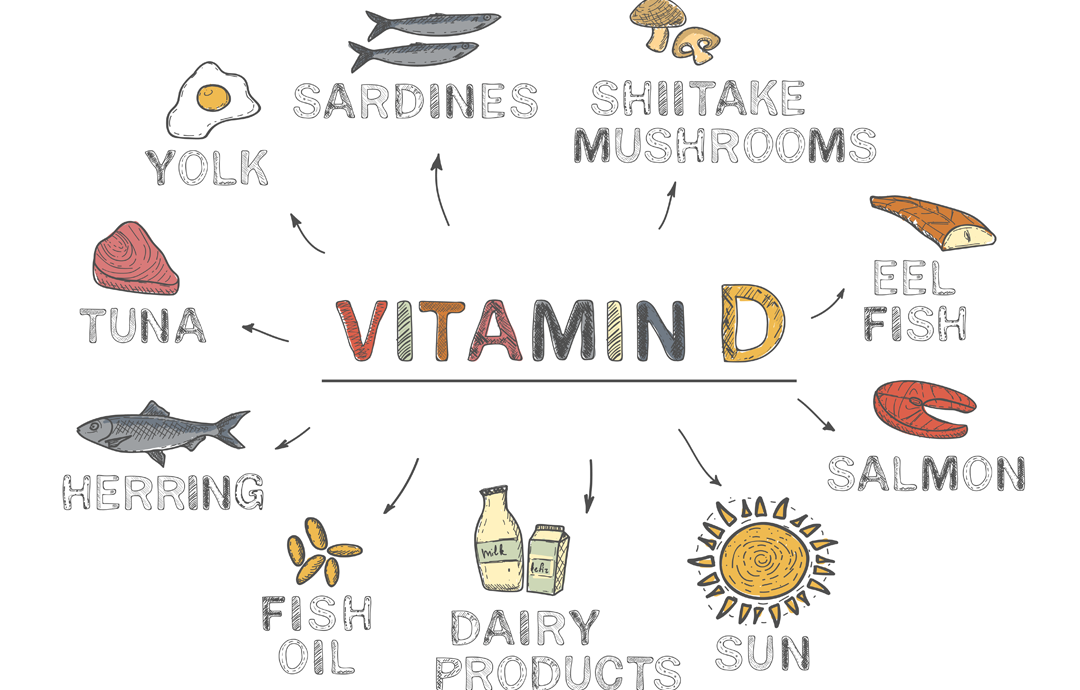
For this reason it is increasingly necessary to shift attention to the intake of vitamin D through food even if unfortunately there are few foods that contain it naturally. We find vitamin D3 in fatty fish, milk and derivatives, eggs, liver while vitamin D2 is contained in some types of mushrooms.
As you can see, mushrooms represent the only foods of plant origin that can contain significant quantities of vitamin D although it must be kept in mind that even for this food the vitamin content can be very variable in relation to actual exposure to sunlight.
Among the different types of mushrooms, IoBoscoVivo Shiitake mushrooms (ORGANIC dry shiitake mushroom – 8g, https://ioboscovivo.com/product/fungo-shiitake-secco-bio-copia/ ) constitute a source of vitamin D as their The cultivation and production method has been designed to maintain the nutritional properties unaltered, including the quantity of vitamin D.
So whether it is through endogenous production on the skin or through the intake of foods rich in vitamin D, in reality what we take is the inactive form and this means that it is not yet able to carry out all the most important functions attributed to this molecule.
To be activated, vitamin D, produced at the skin level or absorbed at the intestinal level, passes into the blood which initially carries it to the liver where it undergoes a first transformation and then to the kidneys where, following a second transformation, vitamin D is produced ,25-dihydroxycholecalciferol, or active Vitamin D!
Vitamin D functions :
But why is it so important to take this vitamin?
The biological effects of vitamin D are mediated by the interaction of the latter with its receptor VDR.
A first function is to regulate the metabolism of Calcium and Phosphate and to control their concentrations in the blood so as to be able to maintain and preserve the optimal conditions for maintaining bone mineralisation.
It is also worth mentioning the importance of this vitamin for the correct trophism of the muscular system as it is not only involved in the synthesis of muscle proteins but can promote the development of strength and muscular performance.
Laboratory studies have also shown how vitamin D appears to be potentially able to prevent or slow down the development of oncological pathologies through its involvement in slowing down cell growth (usually altered in the case of oncological disease), promotes programmed death (apoptosis) of cancer cells, and reduces the formation of new blood vessels (angiogenesis).
Another fundamental point is the involvement of the vitamin in the activation of the immune system. In fact, some cells of the immune system present both the receptor for vitamin D and the enzymatic mechanisms necessary to convert it into its active form, therefore suggesting an immunomodulatory but also regulatory action of the inflammatory response against bacterial and viral agents.
Finally, an aspect that has attracted particular interest and is still being studied is the involvement of vitamin D and its receptor in the regulation of insulin release by the pancreas and in its ability to influence insulin sensitivity. of peripheral tissues showing a potential involvement of the vitamin in the prevention of the development of diabetes or cardiovascular diseases.
Bibliography
- Ceglia L. Vitamin D and its role in skeletal muscle. Curr Opin Clin Nutr Metab Care . 2009;12(6):628-633. Available at https://pubmed.ncbi.nlm.nih.gov/19770647/
- Strazzullo P. et al., Punto Su “IMMUNITY VITAMIN: between truth and wishful thinking”. 2020; available at https://sinu.it/2020/04/27/il-punto-su-vitamina-de-immunita-tra-verita-e-wishful-thinking/
- Cantorna MT, et al. Vitamin D and 1,25(OH)2D regulation of T cells. Nutrients . 2015;7(4):3011-3021. Available at https://pubmed.ncbi.nlm.nih.gov/25912039/
- Muscogiuri G, et al., Can vitamin D deficiency cause diabetes and cardiovascular diseases? Present evidence and future perspectives. Nutr Metab Cardiovasc Dis. 2012 Feb;22(2):81-7. Available at https://pubmed.ncbi.nlm.nih.gov/22265795/
- Reference Intake Levels of Nutrients and Energy for the Italian Population. 4th revision – 2nd reprint