
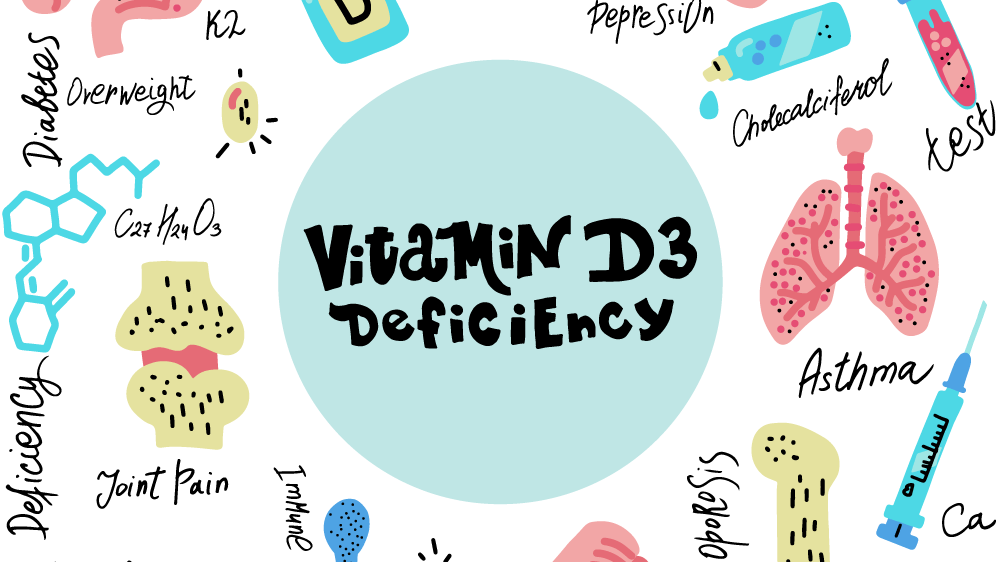
VITAMIN D and related pathologies
Share
In recent years, thanks to intense research, the presence of vitamin D receptors in many body areas has been identified, consequently the growing importance of the role of this vitamin in processes such as neuromuscular function, cardiovascular diseases has been highlighted. , neoplasms, diabetes and in the processes of inhibition and regulation of the autoimmune system. Vitamin D deficiency is particularly frequent in Italy, especially in the elderly and in the winter months, a situation that takes on an even more dramatic aspect in institutionalized subjects or those with other problems, both due to poor sun exposure and dietary imbalances. So find out what current studies tell us about the correlation between vitamin D and some pathologies!
In addition to the well-known effects on bone metabolism, vitamin D, as we have seen, plays a key role in many biological processes. In recent years, thanks to intense research, the presence of vitamin D receptors has been identified in many other body areas, such as muscle tissue, liver, pancreas, immune system and central nervous system. Consequently, the growing importance of the role of vitamin D has been highlighted, involved in processes such as cellular differentiation, neuromuscular function, cardiovascular diseases, neoplasms, diabetes and in the processes of inhibition and regulation of the autoimmune system.
As we already know, the serum concentration of 25(OH)D (not yet active vitamin D) is considered the best index of vitamin reserve, which is considered to be at physiological values between 75 and 100 nmol/L. Vitamin D deficiency is particularly frequent in Italy, especially in the elderly and in the winter months. 86% of Italian women over 70 have 25(OH)D concentrations lower than 25 nmol/L at the end of winter and this value takes on even more dramatic levels in institutionalized subjects or with other problems, both due to poor sun exposure and dietary imbalances.
So let's see what current studies tell us in relation to the correlation between vitamin D and some pathologies:
Vitamin D and osteoporosis
Osteoporosis is one of the chronic-degenerative pathologies and afflicts approximately 1/3 of women after menopause, despite numerous studies we have demonstrated a spread of this pathology in old age in both sexes, determining a high increase in the risk of osteoporotic fractures even in 'man.
Fragility fractures are the main complication of osteoporosis and these appear to be more common in conditions of low serum 25(OH)D concentrations, as they predict reduced bone mineral density and consequently a higher risk.
Vitamin D and muscle function
Physical activity is a very important element for maintaining what is defined as a "good state of health"! In fact, carrying out physical activity allows us to increase aerobic capacity, resistance and muscular strength, also facilitating weight loss with a global improvement in motor autonomy, a reduction in the risk of falls, as well as improving the tone of the mood and metabolic activities, especially in the elderly population. Experimental studies have detected the presence of vitamin D receptors in skeletal muscle, thus explaining how this vitamin can influence muscle metabolism by stimulating protein synthesis, increasing the percentage of muscle fibers and improving muscle function itself.
Clinical studies conducted on an elderly population have shown how low concentrations of 25(OH)D are associated with decreased muscle strength in the limbs and greater mobility problems in these people.
Vitamin D and cognitive function
The most current studies are evaluating the potential involvement of vitamin D in the maintenance of cognitive function, also in this case explained by the presence of its receptors in the brain. Furthermore, a peculiarity discovered in relation to brain tissue is that it would seem that in these areas a fundamental enzyme is produced to obtain the active form of vitamin D and that the latter would in turn stimulate the removal of the amyloid plaques typical of the disease of Alzheimer's disease and to reduce the mortality of brain cells induced by these plaques.
Vitamin D and diabetes
Diabetes mellitus represents an extremely widespread pathology in most industrialized countries where it represents the fourth cause of death for the population over the age of 65.
Also in this case, studies still in progress are evaluating whether low concentrations of 25(OH)D can be considered a potential risk factor for the onset of diabetes as it has been demonstrated that some metabolites of vitamin D are involved in the control of metabolism. of glucose, particularly through insulin secretion and sensitivity.
To conclude we can say that although there are several studies on vitamin D and its correlation to some pathologies, such as in the case of osteoporosis, to date there are still many uncertainties in this regard which may be clarified thanks to future studies.
Bibliography
- file:///C:/Users/ibv4/Downloads/1300-012-022-pigozzo%20.pdf