VITAMINA DE VITAMINA K: how do they interact with each other?
Share
Another micronutrient that is fundamental for our body and which can act in synergy with vitamin D is vitamin K.
This vitamin falls into the group of fat-soluble vitamins and we can distinguish 3 forms:
- Vitamin K1 or phylloquinone, of plant origin, we can therefore take it through food;
- Vitamin K2 or menoquinone-n, of bacterial origin
- Vitamin K3 of synthetic origin, i.e. chemically produced and inserted into drugs or supplements.
Where do we find vitamin K?
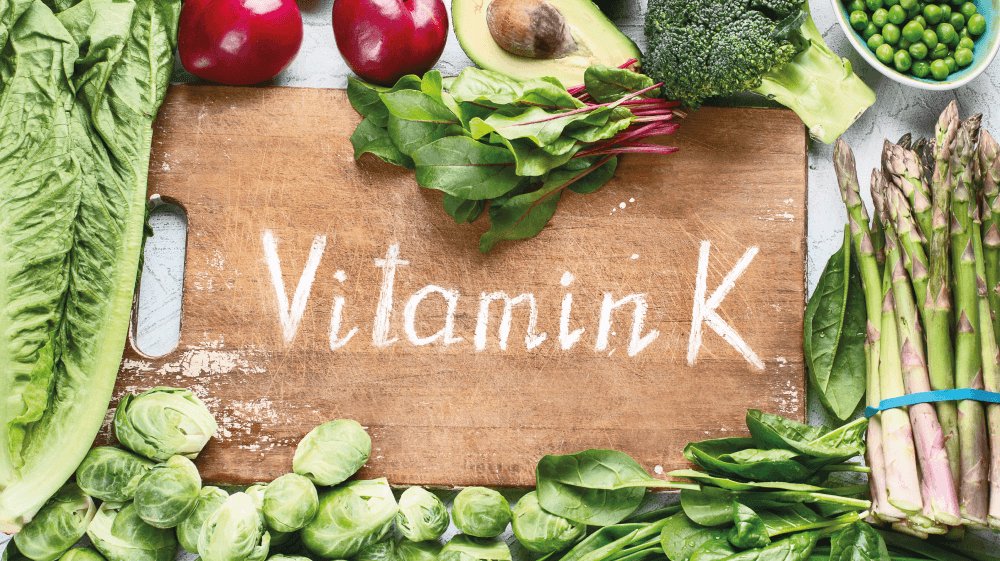
The K1 form is found mainly in the "vegetables" food group such as broccoli, spinach, turnip greens and more generally in green leafy vegetables which cover 83% of the daily intake of this vitamin.
A source of vitamin K2 for our body is instead represented by our intestinal microbiota which is able to synthesize considerable quantities of vitamin K2 in the colon even if in reality the vitamin intake is considered low due to the difficulty in absorbing it in the distal colon.
What is the need for vitamin K?
The LARN tells us that an adequate daily intake of vitamin K for adults aged 18 to 59 is 140µg/day and 170µg/day for individuals aged 60 and over.
Vitamin K functions:
Vitamin K has a fundamental role in blood coagulation processes, but also plays a notable role in the regulation of bone metabolism and in the reduction of vascular calcification by acting in synergy with vitamin D.
In recent years, the association between insufficiency of fat-soluble vitamins and cardiovascular disease (CVD) has been established. A vitamin D deficiency can affect the cardiovascular system in several ways that we have already covered in previous articles but usually, when purchasing a vitamin D supplement it is often combined with vitamin K.
Erroneously, until a few years ago it was thought that taking vitamin K together with vitamin D was due to better intestinal absorption of the latter. To date, however, we know that the joint integration of the two vitamins is related to their synergistic action on bone mineralization and calcium metabolism.
In some studies both in vivo and in vitro, vitamin K2 has shown an effect in increasing bone mass and reducing fractures by playing a fundamental role in the γ-carboxylation of osteocalcin (OC), a protein involved in bone mineralization which it needs this reaction to be able to carry out its function. Furthermore, the synthesis of Osteocalcin is carried out by specific cells present in our bone tissue called osteoblasts responsible for the formation of the tissue itself and therefore fundamental for correct bone mineralisation. The synthesis of osteocalcin by osteoblasts is regulated by adequate levels of Vitamin D while Vitamin K plays a key role in maintaining the number of osteoblasts stable by inhibiting the cell death process.
The two vitamins therefore intervene in the regulation of calcium metabolism, which also contributes to preventing bone fragility, but which if present in excessive quantities tends to deposit, creating accumulations, or calcifications which can become harmful, especially at the level of the blood vessels. contributing to the process of atherosclerosis.
Once synthesized, osteocalcin is largely deposited in the bone matrix and to a lesser extent secreted into the blood circulation. Here osteocalcin binds calcium ions and, having an affinity for hydroxyapatite, a major component of bone tissue, allows the targeting of calcium ions precisely at the level of this tissue. To avoid unwanted effects, vitamin D improves the assimilation of the mineral, while K2 intervenes by making a "reasoned distribution", sending it to the tissues that need it most.
Due to these important functions it is best to avoid a deficiency of this vitamin. As we have said, our intestinal microbiota represents a source of vitamin K as the bacteria themselves are responsible for its production in the colon. This process occurs when the intestinal bacterial flora is in a condition of EUBIOSIS, i.e. of balance and well-being. On the contrary, in situations of DYSBIOSIS, when this balance is lost, the production of the vitamin will no longer be lost. It is therefore of fundamental importance to promote the balance of the intestinal bacterial flora which is increasingly compromised. IoBoscoVivo shiitake mushrooms ( https://ioboscovivo.com/shop/ ) are an excellent source of fibre, as well as vitamin D, and in particular are rich in Lentinan, a β-glucan which is recognized as having a prebiotic action and which can therefore contribute to maintaining a condition of intestinal eubiosis!
Bibliography
- Huang, ZB., Wan, SL., Lu, YJ. et al. Does vitamin K2 play a role in the prevention and treatment of osteoporosis for postmenopausal women: a meta-analysis of randomized controlled trials. Osteoporos Int 26, 1175–1186 (2015). Available at https://doi.org/10.1007/s00198-014-2989-6
- Tsugawa N. Cardiovascular Diseases and Fat Soluble Vitamins: Vitamin D and Vitamin K. J Nutr Sci Vitaminol (Tokyo). 2015;61 Suppl:S170-S172. doi:10.3177/jnsv.61.S170. Available at https://pubmed.ncbi.nlm.nih.gov/26598844/
- Reference Intake Levels of Nutrients and Energy for the Italian Population. 4th revision – 2nd reprint
- Nutrition foundation of Italy, vitamin K. Available at http://www.nutrition-foundation.it/monografie/La-vitamina-K.aspx